
Pennsylvania Property Records Search
Pennsylvania property records are public documents maintained by county offices, state agencies, and online portals throughout the Commonwealth. Whether you need a deed, a tax record, a lien filing, or a survey from a prior century, you can find it through official channels. This guide walks you through the key resources, explains where records are kept, and shows you how to search Pennsylvania property records quickly and with confidence.
Pennsylvania Property Records Quick Facts
Pennsylvania Property Records Overview
Property records in Pennsylvania cover a wide range of documents. Deeds, mortgages, liens, easements, and tax records all fall under the broad category of property records. Each document tells part of the story of a parcel's history. When you combine them, you build a clear picture of who owns a property, what it is worth, and whether any claims exist against it.
The state uses a two-track system. County offices handle the recording of private transactions between buyers and sellers. State agencies handle original land grants, UCC filings, tax oversight, and court records. Both tracks are open to the public. Pennsylvania's Right-to-Know Law sets the foundation for public access, and the Pennsylvania Office of Open Records enforces it statewide.
The statewide portal at pa.uslandrecords.com connects many county recorder offices into one search system. You can search by name, document type, or parcel number depending on the county. Most results include scanned images of the original documents. This makes it easy to review a deed or mortgage without traveling to the courthouse.
Pennsylvania is divided into 67 recorder districts, each with an elected Recorder of Deeds. Recorded documents are assigned a sequential book and page number when filed. That number becomes the permanent reference for the document. Scanned images are available for viewing from public terminals at recorder offices and online from home.
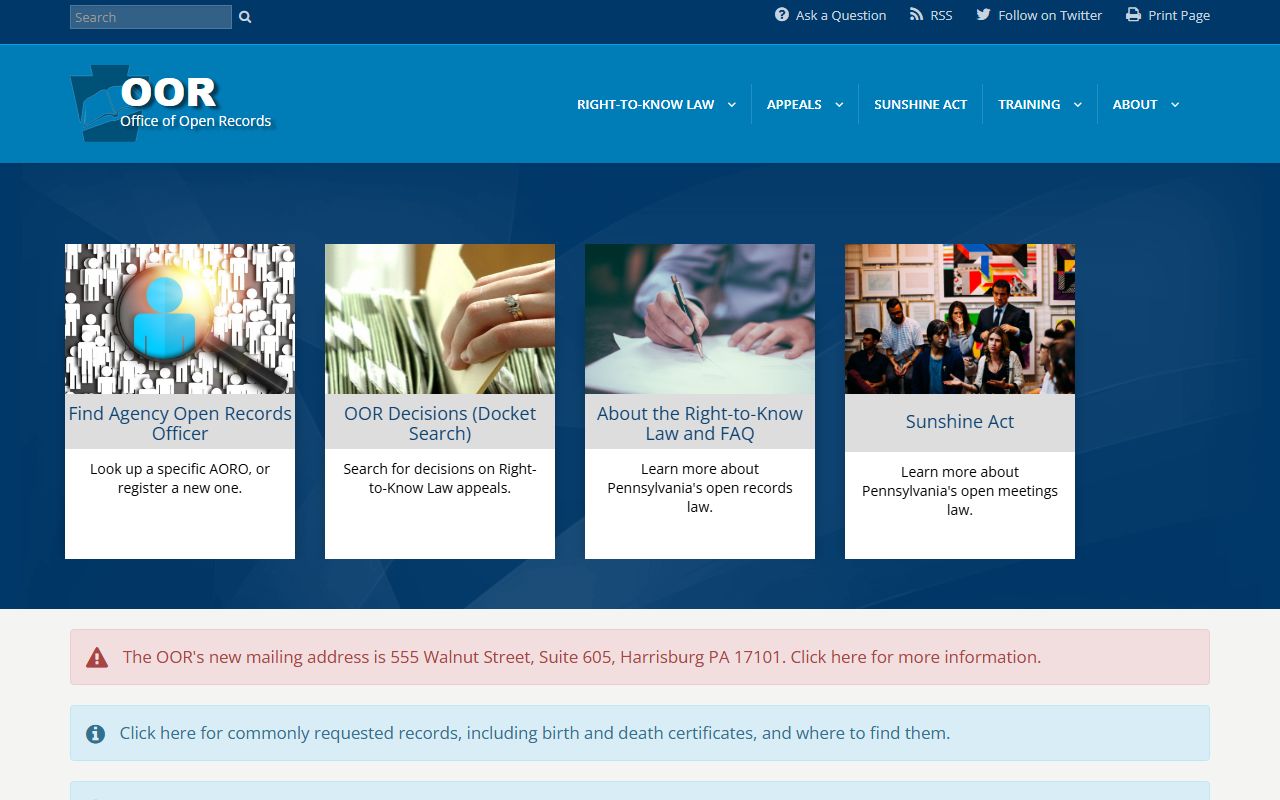
The Pennsylvania Office of Open Records, shown above, serves as the state's central authority for public records access and handles appeals when records requests are denied.
Note: Not all counties are connected to the statewide portal. Some smaller counties still require in-person or mail requests for older document images.
Where Pennsylvania Property Records Are Kept
Most property records are held at the county level. Each of Pennsylvania's 67 counties has a Recorder of Deeds office. That office records and stores deeds, mortgages, satisfactions, assignments, and other instruments that affect real estate title. Each document gets a unique book and page number when it is recorded. That number becomes the permanent reference for that document.
County assessors and tax claim bureaus hold a separate set of records. Assessment records include parcel identification numbers, land and building values, ownership names, and tax payment history. These records sit with the county. They are public documents and most counties post them online through a county-specific portal.
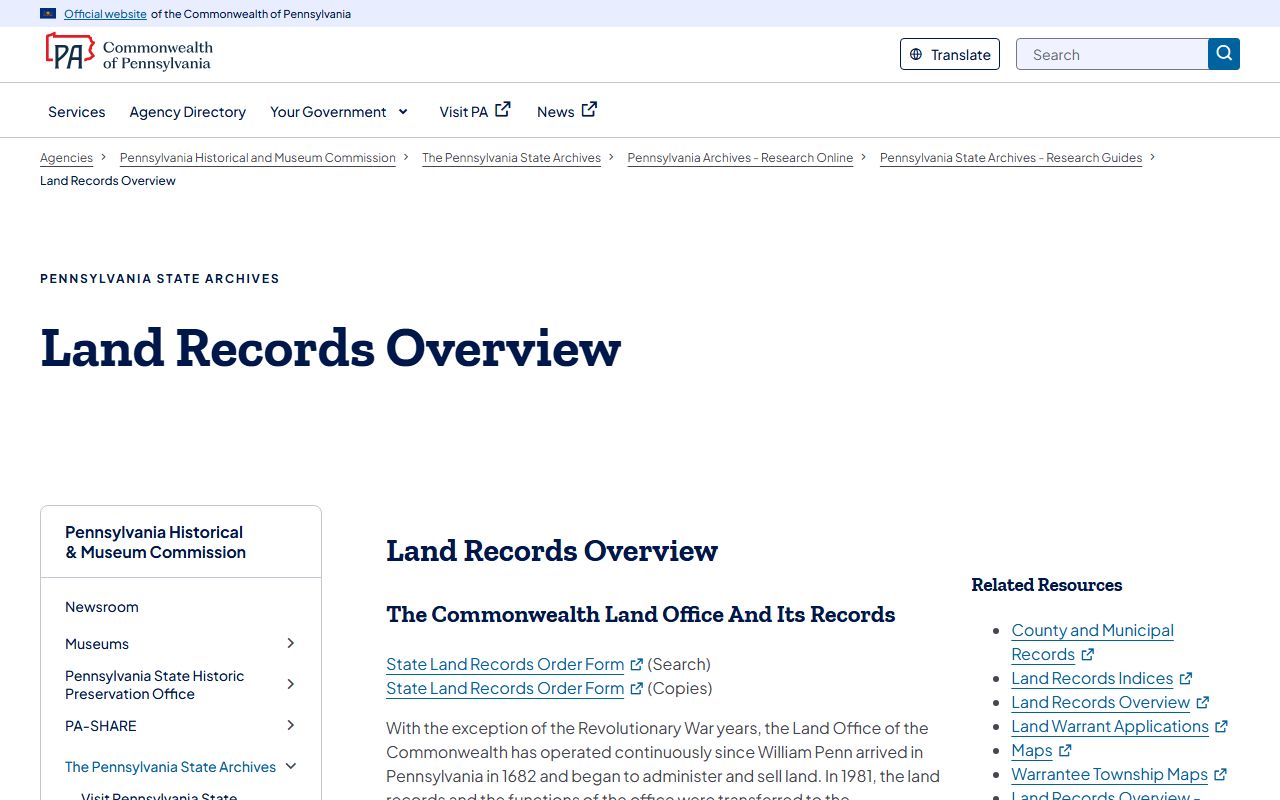
The Pennsylvania State Archives maintains original land records dating back to William Penn's arrival in 1682, providing a foundation for tracing early property ownership across the Commonwealth.
Historical land records from the colonial and early statewide periods live at the Pennsylvania State Archives. The Archives hold the records created by the original Land Office, which operated from 1682 onward. These records document the first transfer of each parcel from the government to a private owner. After that first transfer, subsequent sales are tracked in the county Recorder of Deeds offices. Researchers should note the difference. The Archives hold the original grant records. The counties hold every later transaction.
The Pennsylvania Unified Judicial System portal holds court records that touch on property. Foreclosures, mechanics liens, tax sales, and property disputes all generate court filings. These records can reveal claims or judgments that affect a property's title.
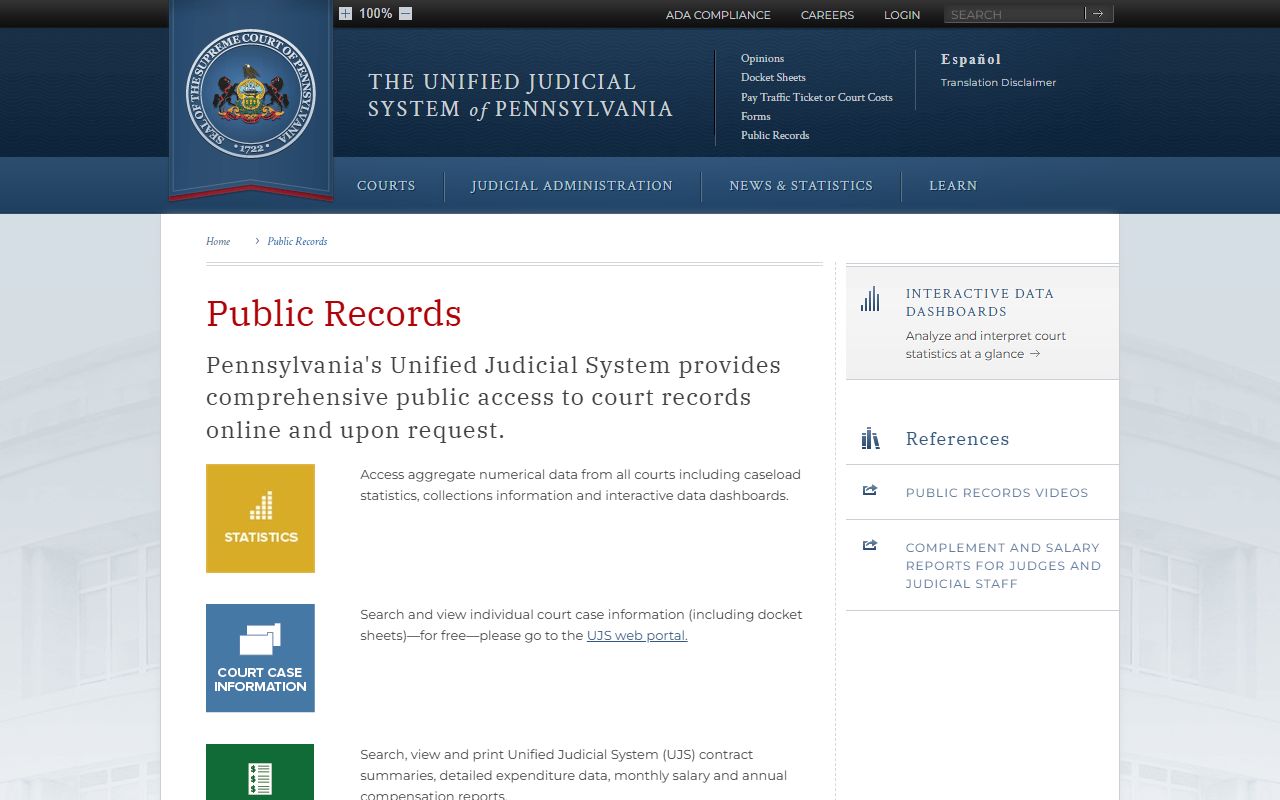
The Pennsylvania Unified Judicial System portal provides free online access to court dockets, including foreclosure filings, judgment liens, and property dispute records from courts across all 67 counties.
Note: The State Archives search room has digitized microfilm copies of some county deeds for research convenience, but staff only search records for which they hold original copies.
How to Search Pennsylvania Property Records
The fastest way to search Pennsylvania property records online is through pa.uslandrecords.com. This portal connects to participating county recorder offices and lets you search by grantor or grantee name, date range, or document type. When a county is connected, you can view scanned document images directly from the search results. The system uses grantor and grantee indexing. Grantor means the seller. Grantee means the buyer.
For tax and assessment records, search your county's official website. Most Pennsylvania counties have an online GIS or parcel viewer that lets you look up a property by address or parcel number. You will find the owner of record, the assessed value, and the tax history. Some counties also link directly to deed images from the assessment record, which saves time when you need both types of information in one search session.
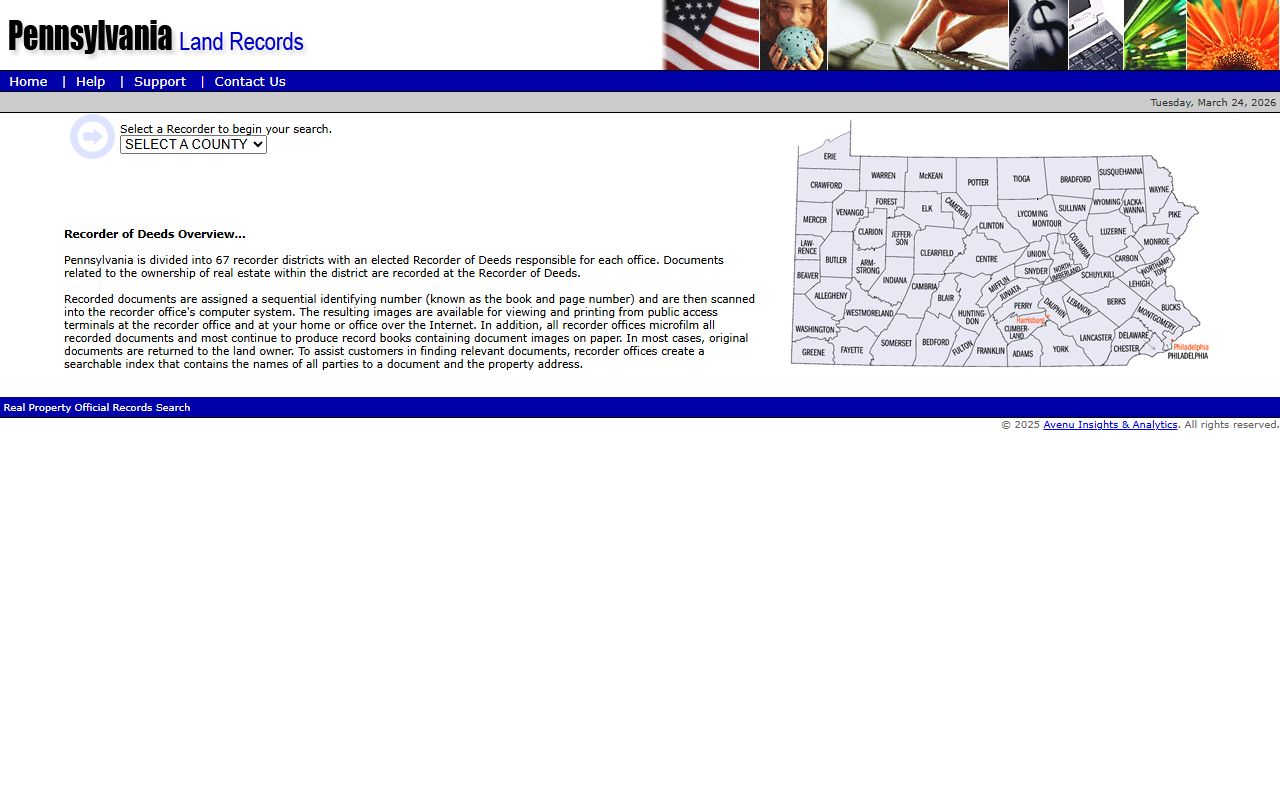
The PA State Real Property Official Records Search at pa.uslandrecords.com offers a centralized way to find deed images and recorded documents from participating Pennsylvania county recorder offices.
Court records are searchable through the UJS portal at no charge. You can find foreclosure filings, judgment liens, and sheriff sale records. These searches often reveal property-related legal activity that does not appear in deed indexes.
For historical research before 1800, start with the State Archives. You will need the name of the original land purchaser, the county, and an approximate date. The Archives can search their original warrant books, survey records, and patent registers. Because county boundaries in Pennsylvania changed over time, it may be necessary to identify which county held the land at the time the document was created.
Note: When searching by name, try spelling variations. Older records often reflect phonetic spelling rather than standard forms.
Pennsylvania Land Records History
Pennsylvania has one of the oldest land record systems in the United States. William Penn arrived in Pennsylvania in 1682, and the Land Office began operating that same year. It has run almost without interruption ever since. That continuity makes Pennsylvania's land records among the most complete in any state. In 1981, responsibility for these historical records moved to the Pennsylvania Historical and Museum Commission.
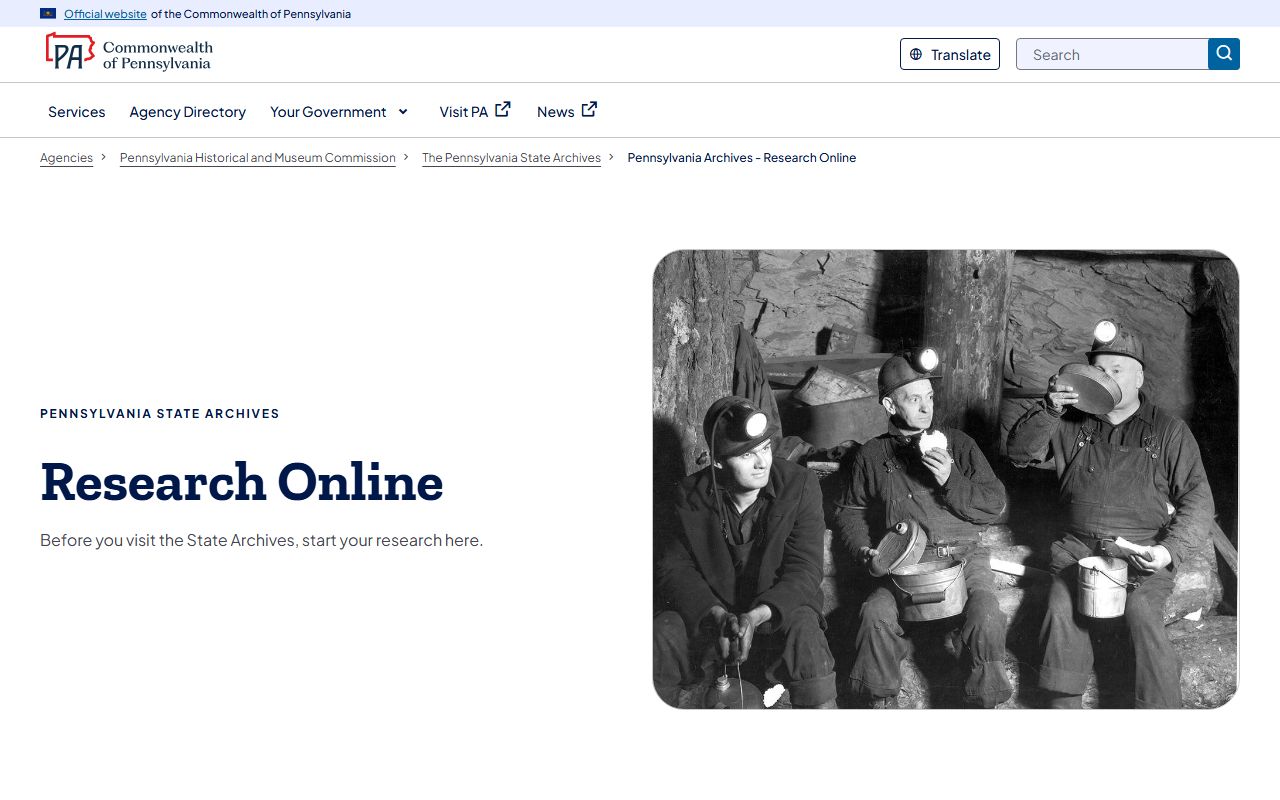
The Pennsylvania Historical and Museum Commission archives, pictured above, house centuries of land records, colonial-era warrants, surveys, and patents that form the backbone of Pennsylvania's property history.
Every original land grant followed a five-step process. First came the application, a simple request for a warrant to authorize a survey. Second was the warrant, a certificate that initiated the title process. The warrant let the purchaser proceed, but it did not convey all rights. Third was the survey, a sketch of boundaries showing the exact acreage. Fourth was the return, a verbal description of boundaries sent from the Surveyor General to the Secretary of the Land Office as an internal document. Fifth and final was the patent, the official deed from Penn or the Commonwealth conveying clear title and all rights to the private owner. These five document types are still held at the State Archives for most original grants.
Researchers working with State land records need to identify the full name of the land purchaser, the county where the land was located, and the approximate date of the transaction. Because Pennsylvania counties were created from earlier ones over time, the county at the time of the transaction may differ from the modern county name. The Archives provide a genealogical map of county formations to help with this.

Resources from the Pennsylvania Association of Realtors complement historical land research by explaining how current property transactions are documented and what records buyers and sellers should expect during a real estate transaction.
It is important to remember the distinction between Commonwealth land records and private deed records. The State Archives hold documents for the first transfer of each parcel from the government to a private buyer. All later transfers between private parties are at the county Recorder of Deeds office. Both sets of records are needed to trace a full ownership chain back to the original grant.
Pennsylvania Right-to-Know Law and Property Records
Public access to Pennsylvania property records is grounded in the Right-to-Know Law, known as the RTKL. The law was signed in 2008 and its central provisions took effect on January 1, 2009. The core rule, codified at 65 P.S. § 67.301, is clear: all records maintained by public agencies are presumed to be public. The burden falls on the agency to prove a record is exempt, not on the requester to justify access. This was a major change from prior law.
The Office of Open Records enforces the RTKL statewide. It serves as the appeals body when a records request is denied. The OOR issues binding opinions, publishes advisory guidance, and maintains a directory of Agency Open Records Officers for every registered government body in the Commonwealth. The OOR was established in February 2008. Its new mailing address is 555 Walnut Street, Suite 605, Harrisburg PA 17101.
The Pennsylvania Local Government Commission works alongside the OOR to help local governments understand their obligations under open records laws, including maintaining accessible property assessment records.
To file a RTKL request, use the OOR's Standard Right-to-Know Law Request Form. Address it to the Agency Open Records Officer at the relevant county or state office. Be specific: name the type of record, the property address or parcel number, and the date range. Keep a copy for your records. If your request is denied or deemed denied, you have 15 business days to file an appeal with the OOR.
The RTKL has 30 statutory exemptions. Most do not apply to standard property records like deeds, assessments, or tax records. Those documents are generally public in full. The exemptions are more relevant for records containing personal security information or active investigations. Property records researchers rarely encounter these barriers.
Note: The Pennsylvania Local Government Commission publishes guidance on assessment procedures and the legal framework for property taxation, which is useful when requesting county assessment records.
UCC Filings and Liens in Pennsylvania
Uniform Commercial Code filings can affect property ownership and transfer. The Pennsylvania Department of State maintains the statewide UCC database. You can search it by organization name or individual name. Results show the filing date, lapse date, filer name and address, filing type, and links to secured party details and transaction history.
The Pennsylvania Department of State's UCC filing system allows anyone to search for liens and secured interests that may affect property ownership or transfer anywhere in Pennsylvania.
Fixture filings are the most property-relevant type of UCC filing. A fixture filing creates a security interest in personal property that is permanently attached to real estate, such as HVAC systems, built-in generators, or solar panel installations. These filings appear in the UCC database, not in the county deed index. A thorough property title search should include a UCC search at the Department of State in addition to the county recorder search.
The Department of State also oversees the Pennsylvania Real Estate Commission, which licenses and regulates real estate agents and brokers. The Commission's licensing database allows verification of real estate professional credentials, which is useful when reviewing the transaction history of a property.
The Pennsylvania Real Estate Commission's licensing database lets you verify the credentials of agents and brokers involved in property transactions, which is useful when reviewing a property's sales history.
Property Assessment Records in Pennsylvania
County assessors in Pennsylvania assign a value to every parcel for tax purposes. Assessment records are public documents. They include the parcel ID, owner name, property address, land value, building value, total assessed value, and often a description of the structure. Most counties post these records online through a GIS viewer or a dedicated tax records portal. You can usually search by property address or parcel number.
The Pennsylvania Department of Revenue oversees state property tax policy and maintains records of tax liens and delinquencies. Local county tax claim bureaus handle the collection of delinquent taxes under the Department's framework. If a property has unpaid taxes, a tax claim lien will appear in the county records and may show up in a title search. The Department also administers the Property Tax/Rent Rebate Program for eligible residents.
The Pennsylvania Department of Revenue maintains tax records and oversees the Property Tax/Rent Rebate Program, with county-level tax records accessible through each county's online assessment portal.
Pennsylvania counties reassess property on varying schedules. Some counties reassess annually. Others go years or even decades between formal reassessments. This means the assessed value may differ significantly from the current market value. The assessed value determines the tax bill. The market value reflects what a buyer might reasonably pay in the open market. Both values serve different purposes in property records research.
The Pennsylvania Local Government Commission publishes resources that explain how assessment procedures work and how property owners can appeal assessments they believe are inaccurate. Those same resources help when you are researching a property's assessment history and want to understand how values were set.
The Pennsylvania State Data Center provides census-based housing and demographic data, offering context for understanding property markets and ownership patterns across all 67 Pennsylvania counties.
Note: The Pennsylvania State Data Center at Penn State Harrisburg is the Commonwealth's official source for housing statistics and can help researchers understand property trends in any county or region.
Getting Copies of Pennsylvania Property Records
There are several ways to get copies of property records in Pennsylvania. Online is the fastest. Use pa.uslandrecords.com for deed images from participating counties. Use the county's own portal for assessment records. Use the UJS portal for court records. Many of these are free to view, with modest fees in some counties for printing or downloading documents.
For records not available online, visit the county Recorder of Deeds in person. Staff can help you search the index and print copies of documents. Bring the property address, the parcel number, or the names of the parties if you have them. Recording offices are generally open during standard business hours on weekdays. Most offices also accept mail requests for copies when you know the exact book and page reference.
PennDOT maintains right-of-way maps and property plats tied to state highways, which can reveal easements and encumbrances affecting properties along transportation corridors throughout Pennsylvania.
For historical records, submit a mail request to the Pennsylvania State Archives. Include the landowner's full name, the county, and the approximate date of the transaction. The Archives have separate forms for searching and for ordering copies. Processing times vary, so plan ahead if you need historical land grants, warrant records, or survey documents from the colonial era.
The Pennsylvania Land Title Association represents title professionals who conduct property searches every day. Their resources explain what records title companies examine, how title searches are conducted, and what problems commonly arise with Pennsylvania property titles. This background is useful whether you are doing your own research or working with a title company on a transaction.
The Pennsylvania Land Title Association offers educational materials on title searches, helping property owners and researchers identify liens, encumbrances, and ownership gaps in Pennsylvania property records.
If a records request is denied, use the Right-to-Know Law process. Submit the OOR's standard form to the Agency Open Records Officer. If denied again, file an appeal with the Office of Open Records within 15 business days. The OOR's opinions are binding on state agencies and most local governments. The Pennsylvania Association of Realtors also provides guides to help property owners and buyers understand what property records to request during a real estate transaction.
Browse Pennsylvania Property Records by County
Each of Pennsylvania's 67 counties maintains property records through the Recorder of Deeds or Assessment office. Select a county to find local contact information and search resources.
Property Records in Major Pennsylvania Cities
City residents access property records through their county courthouse. Select a city to find local resources and contact information.